
Every skip leaving a building site contains more than unwanted materials. It also represents resources, manufacturing, transport and money. When usable materials end up in landfill, that value is lost.
At Concept Build Group, we recognise that building responsibly includes considering what happens to the materials we don't use. From the products we choose to the lengths of timber we order, practical decisions can help reduce waste before it reaches a skip.
The scale of the problem
BRANZ's Level guidance reports that construction and demolition account for an estimated 40–50% of New Zealand's waste going to landfill, and that constructing an average home generates around four tonnes of waste. These figures highlight the opportunity our industry has to make better use of materials.
Traditionally, a common approach has been to place timber offcuts, metals, plastics, packaging and other construction waste into mixed skip bins. Although some providers sort these loads to recover materials, much still ends up at landfill, where it is deposited, compacted and covered.
Once materials are mixed, damaged or contaminated, recovering them becomes harder. The better question is: what could we have done before they reached the bin?
Turning sustainability into practical decisions
Through his master's-level business studies, our director, Henry McGarry, has explored sustainability on a global scale, including how businesses use resources and the responsibility they have to reduce their environmental impact.
At Concept, that learning informs everyday decisions about procurement, design coordination and site management. We recognise there is more to do, and our approach is to make practical improvements that can become part of how we build.
Giving materials another life with saveBOARD
One example is our use of saveBOARD for project hoardings—the temporary barriers surrounding our building sites.
saveBOARD manufactures building boards using recycled packaging, including beverage cartons and soft plastics. Materials that might otherwise become waste are turned into a useful construction product.
The opportunity continues after the hoarding has served its purpose. Through its take-back programme, saveBOARD can accept eligible offcuts and end-of-life boards for remanufacturing into new boards.
Packaging can therefore have a second life as site hoarding, and a third life as another board when returned for processing. This depends on actually collecting and returning the material in the condition required by the manufacturer. Boards must be prepared appropriately, with fixings removed, and transport back to the facility arranged.
Ordering carefully to reduce offcuts
Waste reduction starts well before construction materials arrive on site.
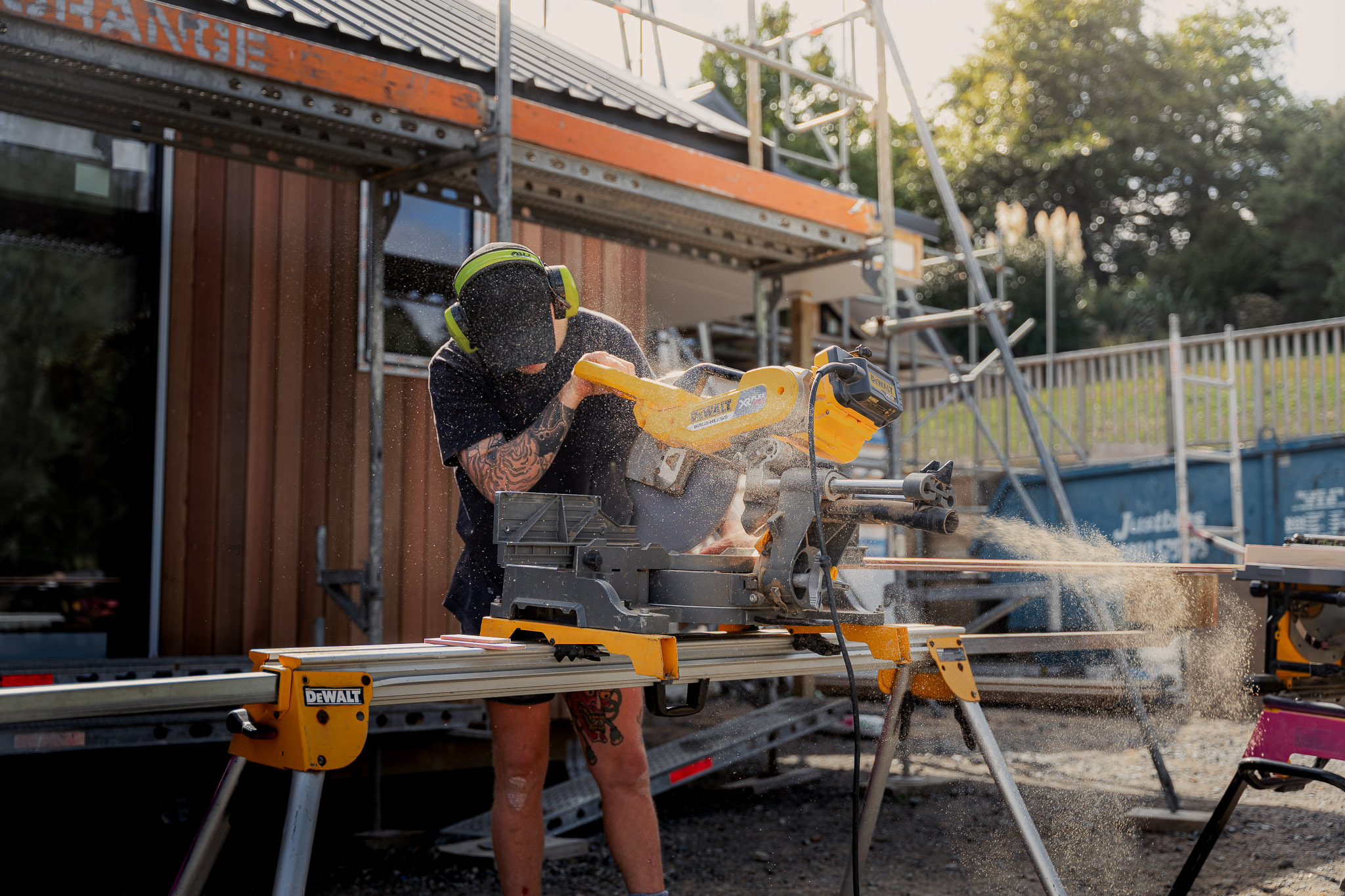
For our vertical shiplap cladding, Concept uses a selected-length ordering procedure. By matching the lengths we order more closely to the building's requirements, we reduce unnecessary cutting and leftover material.
We estimate this approach reduces cladding waste by approximately 15% on orders using this procedure, although the result varies with the design, available lengths and installation requirements.
Our involvement in design coordination and careful project management creates further opportunities to reduce waste. Reviewing dimensions, material quantities and installation details early can help avoid over-ordering and unnecessary rework. Protecting materials during storage also helps ensure what has been purchased can actually be used.
Separating materials and improving timber recovery
Concept separates metals from timber, helping keep recoverable materials out of mixed waste. We are also working with waste-management providers towards better sorting arrangements, including separate bins for different material streams.
This work is ongoing. Providing separate bins is one step; confirming where their contents go and what is actually recovered is equally important.
Timber deserves particular attention. We believe our industry needs to do more to keep usable timber in circulation. Suitable timber can be reused or processed into another useful product, but the available options depend on its treatment, coatings, condition and the receiving facility's requirements. Treated or contaminated timber cannot automatically follow the same recycling route as clean, untreated wood.
Better separation at the source helps preserve those options.
Practical tools for better building sites
There are useful tools available to help builders turn good intentions into consistent practice. BRANZ's REBRI guides and plans include waste-minimisation planning and waste-transfer records for tracking materials and their destinations.
Useful steps include:
- Plan before work begins: identify likely waste materials and confirm which local providers will accept them.
- Make sorting straightforward: use clearly labelled bins and explain the system to everyone working on site.
- Keep usable offcuts accessible: provide a designated storage area so suitable pieces can be used before new material is cut.
- Arrange supplier returns: check take-back requirements before products are ordered.
- Measure the outcome: request recovery and disposal records, then use the findings to improve the next project.
At Concept Build Group, we see waste reduction as part of good construction management. Careful ordering, thoughtful product selection and better material separation all contribute to using resources more responsibly.
Every project is an opportunity to improve—and to think more carefully about what we build, what we use and what we leave behind.