
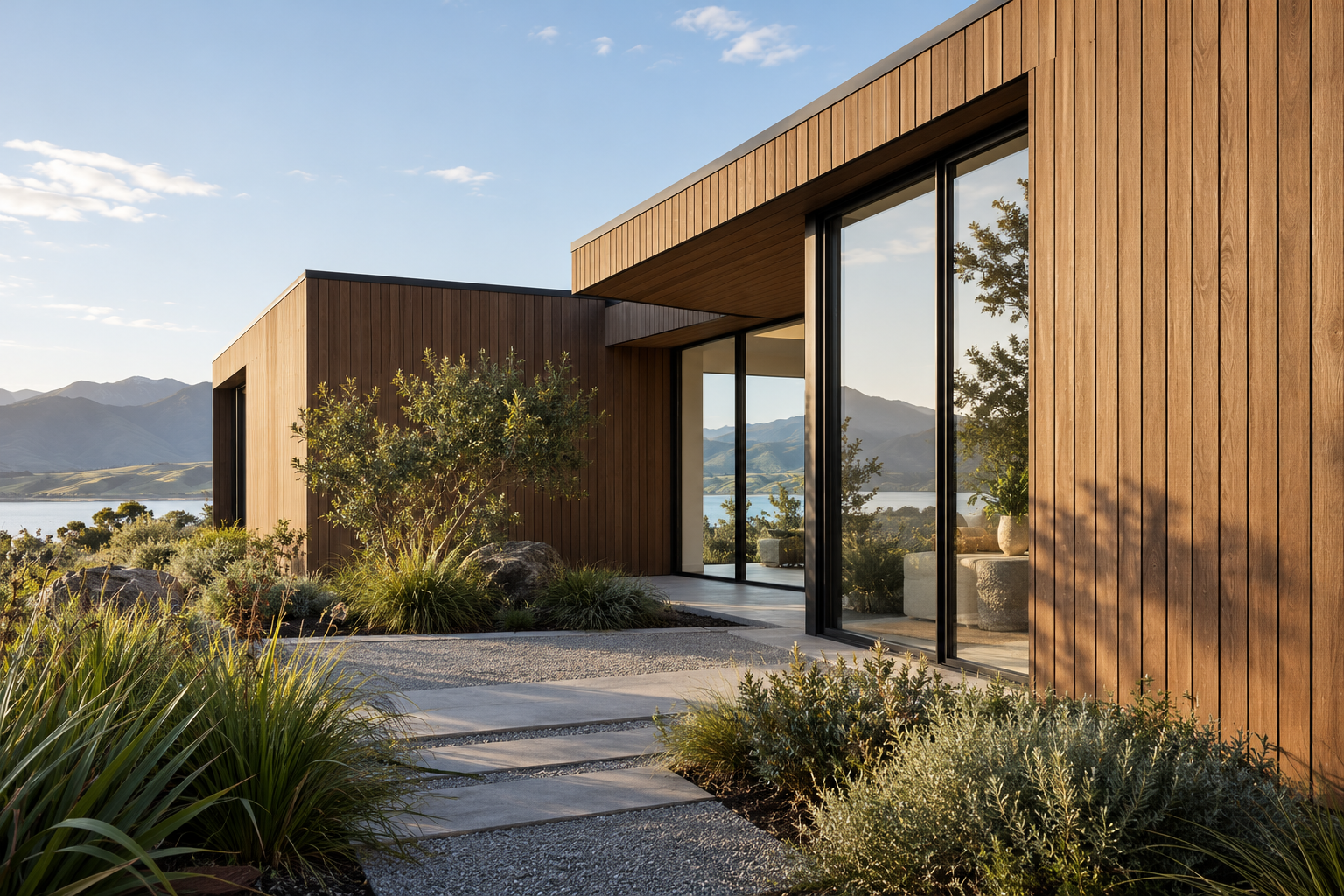
Natural timber gives a building warmth, texture and character. At Concept Build Group, cedar has traditionally been a familiar choice for vertical cladding on mid to high-end homes and commercial projects. Today, thermally modified timber offers another option worth considering when balancing appearance, durability and responsible material selection.
Why cedar has been such a popular choice
Western red cedar has a long history in New Zealand architecture. Its natural resistance to decay, light weight and distinctive grain help explain its appeal. Hermpac describes it as "highly valued for its durability, stability and overall beauty".
Western red cedar and Alaskan yellow cedar are two familiar options in the New Zealand market. Their North American origins include British Columbia, Canada, with yellow cedar also found in Alaska. The species have different appearances: western red cedar offers varied brown and reddish tones, while yellow cedar has a paler, more consistent colour.
Cedar remains a worthwhile material when responsibly sourced and correctly specified. However, it makes sense to explore alternatives that broaden our choices and make good use of renewable timber resources.
Looking more carefully at sustainability
Forests face pressures from a changing climate. Research into yellow cedar decline in Alaska links tree mortality to reduced protective snow cover and root freezing. This reinforces the importance of understanding where our building materials come from and considering a broader range of responsibly sourced options.
For a building project, the useful questions are practical ones: where was the timber grown, how was the forest managed, what processing was required, and how long will the finished cladding last? Certification, transport, maintenance and eventual reuse all deserve consideration. A modified timber can be a more sustainable option, but the comparison should be made between specific products and supply chains.
What thermal modification actually does
Thermal modification uses carefully controlled high temperatures and steam to change the timber's properties. The process reduces its tendency to absorb moisture and improves dimensional stability and resistance to fungal decay. It does not involve injecting resin into the timber.
Pine is one option, but thermally modified timber is a category rather than a single species. New Zealand suppliers offer different species, grades and finishes. Abodo's Vulcan range, for example, uses FSC-certified New Zealand radiata pine.
Established technology with contemporary appeal
Modern thermal modification has a substantial European history, including research in Finland, France and the Netherlands in the 1990s. Today, New Zealand clients can access this established technology through a range of timber suppliers.
For homeowners, the appeal is easy to see. Thermally modified timber can provide rich brown tones and a natural grain that works well with contemporary vertical cladding, interior panelling and screens. Reduced moisture uptake can also help limit movement as conditions change.
Where Hermpac fits into the alternatives
Hermpac is a useful starting point when comparing timber species, weatherboard profiles and finishes. Its published brochures include western red cedar, yellow cedar and Accoya, allowing clients and designers to explore different routes to a natural timber exterior.
Accoya needs a separate explanation. It is modified radiata pine, but its process is acetylation rather than thermal modification. This changes the wood's chemistry to reduce moisture uptake and improve durability and stability. Both approaches enhance timber, but they should not be described as the same treatment.
Choosing the right timber for your project
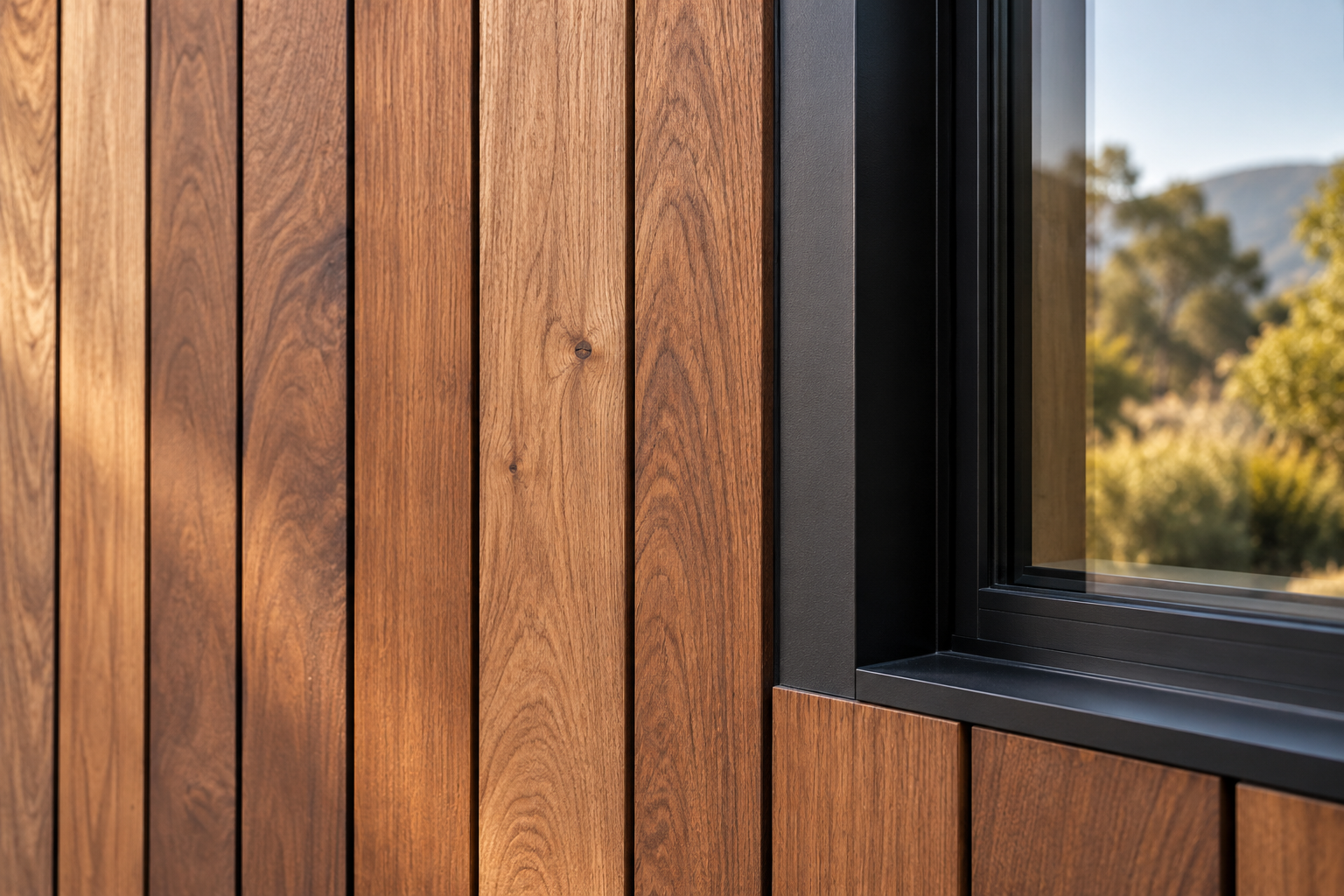
The timber species is only part of the decision. Profile, board width, finish, exposure and the overall cladding system all affect the result. Thermally modified timber also changes colour outdoors: maintaining a chosen tone requires an appropriate coating and ongoing care. It should not be presented as maintenance-free.
Our recommendation is to review physical samples alongside the building design and discuss the supplier's installation and maintenance requirements early. For commercial projects, the design team also needs to check the selected system against the project's fire and other performance requirements.
At Concept Build Group, we see value in giving clients informed choices. Cedar may still be the right fit, while thermally modified timber or an acetylated option such as Accoya may better suit another project. Understanding the differences helps us make decisions that work for the design, the budget and the longer-term use of the building.
Planning a new home, renovation or commercial project? Talk to Concept Build Group about timber cladding options and how they could work with your design.